Troubleshooting guide

Observe first. Guess less. Stay out of the dangerous parts.

A good service call begins with a clear symptom and a short timeline. These checks are limited to normal controls, filters, visible airflow paths, and observations from a safe distance.

Start at the control

Record the setting before changing it.

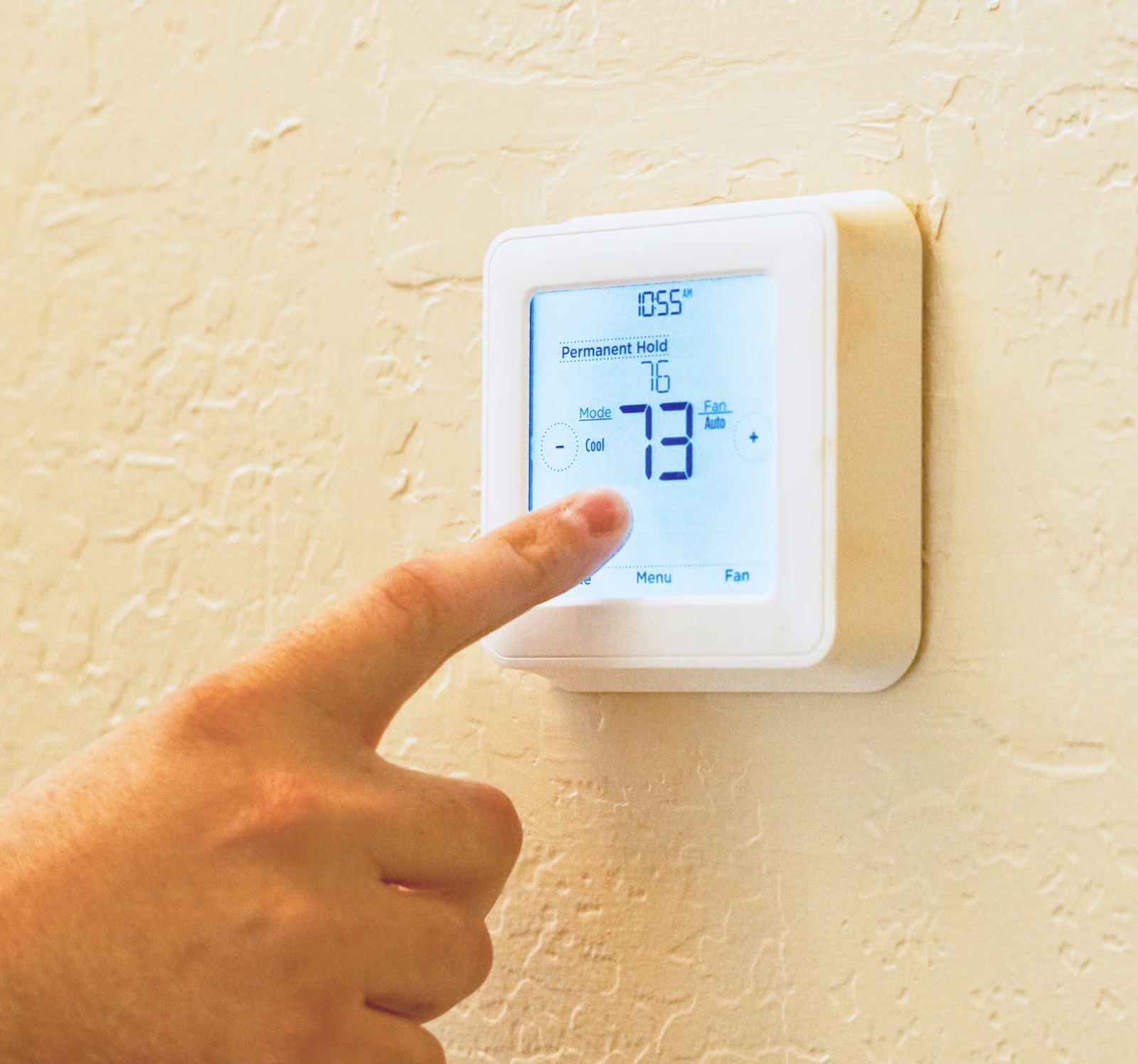
Photograph the display, then note the mode, setpoint, room temperature, time, and any warning or schedule message. A single large setpoint change will not make a healthy system cool faster.

If the display is blank, the breaker trips again, or water is present near the indoor equipment, stop and call qualified help.

Hand adjusting a digital wall thermostat set to 73 degrees
Illustrative stock photography.

Before choosing a symptom

The safe five-minute check.

  1. 1
    Thermostat

    Correct mode, reasonable setpoint, readable display, fresh batteries if the model uses them.

  2. 2
    Filter

    Correct size and direction, not visibly loaded, and no improvised filter arrangement.

  3. 3
    Air paths

    Supply registers open, return grilles clear, doors not creating an obvious pressure problem.

  4. 4
    Power—once

    Check normal switches and breakers once. Never keep resetting a breaker that trips again.

  5. 5
    Evidence

    Photos of model labels, thermostat messages, water or ice, plus a timeline and room list.

Symptom library

Make the next call more productive.

Each section separates homeowner observations from conditions that deserve professional attention.

01

The system runs but the air is not cool

Safe things to check
  • Confirm the thermostat is in COOL mode and set below room temperature.
  • Look at the filter without opening equipment panels; replace it if visibly loaded and you know the correct size and direction.
  • Confirm supply vents and return grilles are open and not blocked.
  • From a safe distance, note whether the outdoor unit is running and whether ice is visible.
Write this down

Indoor and outdoor temperatures, thermostat setting, airflow strength, when the problem began, and whether the outdoor unit starts.

Call qualified help when

Ice, repeated stopping, electrical buzzing, no outdoor-unit operation, or cooling that does not improve after basic settings and airflow are corrected.

02

The system will not heat

Safe things to check
  • Confirm the thermostat is in HEAT mode and the setpoint is above room temperature.
  • Check the filter and visible airflow paths.
  • Note whether the indoor blower starts and whether the thermostat displays an error or low-battery message.
  • If you know the system has a normal service switch, confirm it was not accidentally turned off.
Write this down

System type if known, thermostat messages, whether the blower runs, any odor, and how long the system attempts to operate.

Call qualified help when

Any gas odor, burning smell, carbon-monoxide alarm, repeated ignition attempt, breaker trip, or failure after the basic checks.

03

Airflow is weak or rooms are uneven

Safe things to check
  • Inspect the filter and confirm its airflow arrow points toward the equipment.
  • Open supply registers and move furniture, rugs, or curtains away from returns.
  • Compare airflow in several rooms and note which branches are weakest.
  • Look for obvious disconnected or crushed accessible duct sections without entering unsafe attic areas.
Write this down

Which rooms are affected, whether doors change the symptom, filter type, recent renovations, and whether the problem is new or longstanding.

Call qualified help when

Persistent weak airflow, whistling returns, inaccessible duct damage, ice, a hot motor smell, or a blower that changes speed unexpectedly.

04

There is water, condensation, or ice

Safe things to check
  • Turn cooling off if water is spreading or threatening a ceiling, floor, or electrical component.
  • Protect the area below the leak and document where the water first appeared.
  • Check whether the filter is badly restricted.
  • Allow visible ice to thaw with cooling off; do not chip or heat it.
Write this down

Location and amount of water, whether the drain has overflowed before, visible ice, filter condition, and recent runtime.

Call qualified help when

Recurring overflow, ceiling damage, water near electricity, a frozen coil, or cooling that freezes again after thawing.

05

The system starts and stops repeatedly

Safe things to check
  • Record the approximate length of each on and off cycle.
  • Confirm the thermostat is not beside a heat source, open window, or supply register.
  • Inspect the filter and visible airflow paths.
  • If a breaker trips, leave the system off after one reset rather than resetting it repeatedly.
Write this down

Cycle times, thermostat location, outdoor conditions, error messages, and whether the indoor and outdoor sections stop together.

Call qualified help when

Repeated breaker trips, rapid electrical clicking, outdoor-unit cycling, ice, overheating odors, or cycling that continues after airflow basics are corrected.

06

There is a new noise or odor

Safe things to check
  • Identify whether it comes from a supply vent, indoor equipment, outdoor equipment, drain, or thermostat.
  • Record a short audio or video from a safe distance.
  • Note whether it happens at startup, shutdown, or throughout the cycle.
  • Shut the system off for burning, electrical, gas, or strong chemical odors.
Write this down

Sound description, exact location, timing, recent work, weather conditions, and any visible vibration.

Call qualified help when

Grinding, metal-on-metal contact, electrical buzzing, heavy vibration, smoke, burning odor, gas odor, or a worsening sound.

07

The thermostat is blank or unresponsive

Safe things to check
  • Check whether it uses replaceable batteries and install the specified type if needed.
  • Confirm the display is not simply asleep or locked.
  • Check the HVAC breaker once and note whether it has tripped.
  • Look for an obvious nearby service switch that may have been turned off accidentally.
Write this down

Thermostat model, display or error code, recent battery change, breaker status, and whether water is present near indoor equipment.

Call qualified help when

A breaker that trips again, water at the indoor unit, damaged wiring, a burning odor, or a display that remains blank after safe checks.

08

The home feels humid or clammy

Safe things to check
  • Record indoor humidity with a reliable monitor if available.
  • Confirm windows and exterior doors close fully and bathroom or kitchen exhaust fans are not left running continuously.
  • Check the filter and note system cycle length.
  • Look for visible drain overflow, sweating ducts, or condensation around supply registers.
Write this down

Indoor humidity, outdoor weather, cycle length, affected rooms, thermostat settings, and whether the system recently changed.

Call qualified help when

Persistent high humidity, visible mold-like growth, sweating ducts, musty odor, water damage, or a system that cools quickly but removes little moisture.

Your service-call brief

Seven facts worth gathering.

  1. Indoor and outdoor equipment model and serial numbers
  2. Approximate system age and maintenance date
  3. Exact symptom and when it began
  4. Rooms affected and current thermostat settings
  5. What starts, stops, leaks, freezes, smells, or makes noise
  6. Any breaker trip, error code, outage, storm, or recent work
  7. Photos, recordings, warranty paperwork, and prior invoices

Prevent the next surprise

Turn observations into a maintenance plan.

Open the maintenance guide